

21
2025
-
05
Processing Technology of Nickel-Titanium Alloy
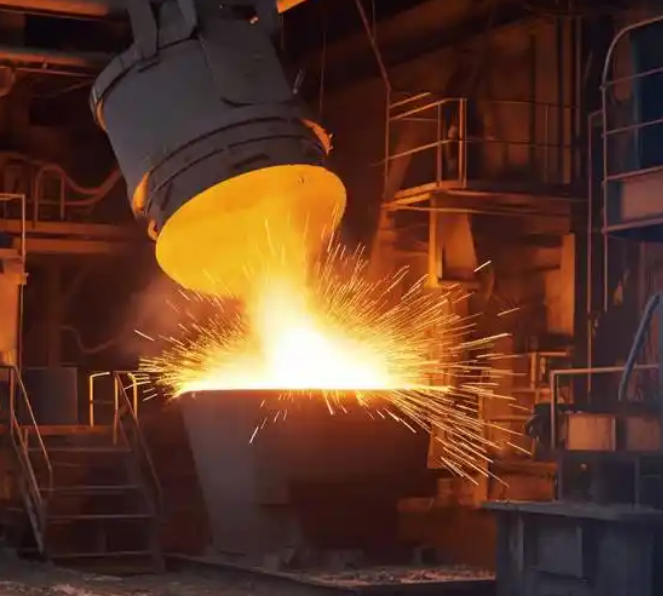
1. Melting
(1) Raw material preparation: High-purity nickel (Ni) and titanium (Ti) are selected as primary materials, precisely proportioned according to the required alloy composition. Trace elements (e.g., niobium, molybdenum) may be added to enhance properties.
(2) Melting equipment: Vacuum induction melting furnaces or electron beam melting furnaces are used under vacuum to minimize impurity contamination and improve purity.
(3) Melting process: Materials are heated until molten (Ni: 1455°C, Ti: 1668°C) with controlled parameters (temperature, time, stirring) to ensure homogeneity.
2. Forging
(1) Billet heating: Cast ingots are heated to 800–1000°C for forging.
(2) Forging equipment: Hydraulic presses or hammers apply multi-directional forging to refine grain structure and enhance density.
(3) Forging ratio: Controlled within 3–10 to optimize strength and toughness.
3. Rolling
(1) Hot rolling: Conducted above recrystallization temperature (~700–900°C) to improve ductility.
(2) Cold rolling: Performed at room temperature for precise dimensional control (e.g., ±0.05mm thickness tolerance).
(3) Parameter control: Roll speed (5–20m/min) and reduction rate (10–30% per pass) are adjusted for uniform microstructure.
4. Heat Treatment
(1) Solution treatment: Heated to 900–1050°C, water-quenched to form supersaturated solid solution.
(2) Aging treatment: Held at 400–600°C to precipitate strengthening phases (e.g., Ni₃Ti).
5. Surface Treatment
(1) Mechanical polishing: Achieve surface roughness Ra <0.2μm using abrasive belts.
(2) Chemical cleaning: Immerse in HF:HNO₃ (1:3 ratio) for 5–10 minutes to remove oxides.
(3) Functional coatings: Apply TiN (2–5μm thickness) via PVD for wear resistance.
6. Forming
(1) Laser cutting: Fiber lasers (1kW power) cut sheets with ±0.1mm precision.
(2) Shape molding: Use dies at 300–500°C to fix memory shapes under 10–50MPa pressure.
7. Quality Inspection
(1) Chemical analysis: ICP-OES ensures Ni/Ti ratio within 50.5–51.5 at%.
(2) Mechanical tests: Tensile strength (>800MPa) and elongation (>15%) are measured.
(3) Metallography: SEM confirms grain size ≤20μm and phase distribution.

Baoji Xinyuanxiang Metal Products Co., Ltd
לְהוֹסִיףBaoti Road, Qingshui Road, Maying Town, אזור פיתוח היי-טק, Baoji City, מחוז שאאנשי
שלח לנו דואר
זְכוּת יְוֹצרִים :Baoji Xinyuanxiang Metal Products Co., Ltd Sitemap XML Privacy policy


